Sunday, March 15, 2015

BRI Collection, Part 2 (511 docs.) on logos


Biblical Research Institute (BRI) Collection, Part 2 (511 docs.)


Leading SDA theologians of the Biblical Research Institute (BRI) serve the global SDA Church with their insight and counsel. Seeking to promote “the study and practice of Adventist theology and lifestyle as understood by the world church,” BRI provides theological resources and promotes dialogue and better understanding of Scripture and doctrine among the worldwide SDA community. Part 2 of the Logos BRI collection includes a trove of miscellaneous pamphlets and books on important issues that suffer from confusion and controversy.

It includes the following books

Books  
Come Boldly to the Throne Ekkehardt Mueller
Daniel: The Seer of Babylon Gerhard Pfandl
Future Glory Ángel M. Rodríguez
Jesus of Nazareth: His Life (vol. 1); His Message, His Passion (vol. 2) William G. Johnsson
Spanning the Abyss Ángel M. Rodríguez
The Great Controversy and the End of Evil: Biblical and Theological Studies in Honor of Rodríguez, Ángel Manuel Ekkehardt Mueller & Gerhard Pfandl, ed.
What are Human Beings that you Remember Them? (3rd Bible Conference at Jerusalem, 2012) Clinton Wahlen, ed.

it includes some answers toward some SDA beliefs and Christian living such as
SDA Beliefs  
A Reply to “What do the Scriptures say about the Sabbath?” Frank B. Holbrook
Baptism Ekkehardt Mueller
Baptismal Instruction in the New Testament and Other Related Issues Ángel Manuel Rodríguez
Change of the Calendar BRI Staff
Children and the Lord’s Supper Ángel Manuel Rodríguez
Christ at His Sanctuary Roy E. Gane
Christian Living  
A Morning Meditation Ángel Manuel Rodríguez
A Woman’s Place Ángel Manuel Rodríguez
Afraid or Not Afraid?—Hebrews 11:27 Ekkehardt Mueller
All About Cosmetics Ángel Manuel Rodríguez
Anointing Ángel Manuel Rodríguez

BRI’s miscellaneous pamphlets—over 500 in number—cover a wide range of topics, from the Apocrypha to zonation of ecology, organized into the following categories:
  • SDA Beliefs
  • Christian Living
  • History
  • Theology
  • Prophecy
  • Health
  • Creation, Flood, & Science
  • Sexuality & Marriage
  • Social Issues
  • Bible Accuracy
  • Bible Study & Interpretation
  • Ellen White & Prophetic Gift
  • Church in Society
  • Miscellaneous Topics
In the Logos edition, the BRI Collection, Part 2 is enhanced by amazing functionality. Scripture citations link directly to English translations, and important terms link to dictionaries, encyclopedias, and a wealth of other resources in your digital library. Perform powerful searches to find exactly what you’re looking for. Take the discussion with you using tablet and mobile apps. With Logos Bible Software, the most efficient and comprehensive research tools are in one place, so you get the most out of your study.

Key Features

  • Presents a wide range of studies from top SDA scholars at the Biblical Research Institute
  • Includes over 500 books and pamphlets in 13 categories of theological issues
  • Provides insights into biblical interpretation, SDA doctrine, and Adventist living
  • Features eight books, including the new two-volume Jesus of Nazareth by William Johnsson


see complete list here

For those who do not know yet
the Biblical Research Institute published two other sets of books on logos, see here and here

Friday, December 26, 2014

Non, Jésus n'est pas né le 25 décembre


Par LEXPRESS.fr, publié le 

C'est pour évangéliser plus efficacement les foules que le clergé, au IVe siècle, aurait décidé de fixer la date de naissance de Jésus au 25 décembre, en se greffant sur une fête païenne. 

Non, Jésus n'est pas né le 25 décembre
Au centre: Joseph en rose, Jésus dans ses langes, et Marie en bleu.
afp.com/Brendan Smialowski
Noël. Une tradition et une fête familiale, qui, pour une majorité d'entre nous, n'a pas ou plus grand-chose à voir avec une pratique religieuse. Mais pour les 12% de Français qui se déclarent catholiques pratiquants, le 25 décembre est l'une des dates les plus importantes du calendrier liturgique: celle à laquelle on fête la Nativité, soit la naissance de Jésus. 
Oui, mais Jésus n'est pas né le 25 décembre. Si l'existence de Jésus, juif galiléen, est une vérité historique pour une majorité d'historiens, on ne sait que peu de chose sur les débuts de sa vie. Et encore moins précisément ses dates et lieux de naissance... C'est le pape Libère qui, autour de l'an 354, aurait très judicieusement décidé de fixer la date de naissance du Christ le jour d'une fête païenne déjà bien installée dans les pratiques populaires de l'époque. Le choix s'est porté sur le 25 décembre, qui correspondait à la fête romaine du "soleil invaincu" (Sol invictus en latin). Un culte païen destiné à célébrer le solstice d'hiver, c'est à dire ce moment de l'année où les journées commencent à rallonger. 
Dit autrement, tout comme certains menhirs bretons ont été transformés en symboles chrétiens en y gravant une croix, la fête romaine du soleil a été christianisée en décrétant que c'était le jour de la naissance de Jésus. 
Plus fort encore, Jésus n'est pas né il y a 2014 ans. Notre actuel calendrier débute par convention avec la naissance de Jésus. En toute logique, Jésus serait donc né au début de l'an 1, soit il y a 2014 ans. Mais d'après de nombreux historiens, Jésus serait plutôt né en -5 ou en -7... avant lui-même. 
Ce qui signifie qu'en toute logique, nous ne serions pas en 2014, mais en 2019 ou 2021. De quoi y perdre son latin. 

En savoir plus sur http://www.lexpress.fr/actualite/societe/non-jesus-n-est-pas-ne-le-25-decembre_1634385.html#HMYwras6oBGs2dEy.99

Thursday, October 30, 2014

Logos 6 has arrived: this particular Bible software is now available on market (for PC and MAC)

for more information see here

Logos 6 is the smartest way to study the Word. With easy‐to‐use tools and a massive theological library, Logos 6 delivers insight. Pinpoint answers in seconds, study the Word in its cultural context, uncover meaning in the original languages, and answer questions with confidence.

Tuesday, September 30, 2014

a blog page of a different "note" than theology on a music piece

Accessed from the blogTomServiceOnClassicalBlog; http://www.theguardian.com/music/tomserviceblog/2014/sep/29/mozart-piano-sonata-manuscript-budapest (September 30, 2014)

Mozart's A major piano sonata K331: the manuscript is discovered!

A chance finding in Budapest has brought a fascinating Mozart manuscript to light. But why can’t we look at it properly?
Balazs Mikusi of the National Szechenyi Library presenting a never before known manuscript of one of the most recognised tunes of Wolfgang Amadeus Mozart, the A major sonata  in Budapest.
A detail from the recently discovered manuscript of Mozart’s A major piano sonata K331. Photograph: ATTILA KISBENEDEK/AFP/Getty Images
News has just come to light of a major Mozart discovery, of a priceless manuscript that had lain in the musty depths of Budapest’s National Szechenyi Library for who knows how many decades, only to be rediscovered by a Haydn scholar making one of the most fortuitous Mozartian tangents of all time.
Instead of a fragment of a letter, a half-forgotten dance, or a torn-off corner of a scrawled sketch, what musicologist Balazs Mikusi found was the substantive part of one of Mozart’s most famous instrumental pieces,the A major piano sonata K331, composed in 1783, whose “Turkish March” finale is one of Wolfgang’s most instantly recognisable tunes, and whose opening movement, a set of brilliantly beguiling variations on one of the most satisfyingly simple melodies he ever composed, is a staple of piano lessons the world over. The final page of the original manuscript has long been known to Mozart scholars, and is part of the legacy in Mozart’s hometown, Salzburg, but no original manuscript of the rest of the piece had ever been seen in modern times.
Balazs Mikusi of the National Szechenyi Library presenting a never before known manuscript of one of the most recognised tunes of Wolfgang Amadeus Mozart, the A major sonata  in Budapest.
Balazs Mikusi of the National Szechenyi Library with the manuscript. Photograph: ATTILA KISBENEDEK/AFP/Getty Images
Until now: Mikusi can’t say how or when these pages ended up in Hungary, and what they reveal are tantalising if subtle differences from the published editions of the sonata: phrasing, dynamics, and even occasionally the notes themselves, as Zoltan Kocsis’s performance on Friday night at the Szechenyi Library revealed. Somewhat frustratingly, the library has only released teasing images of the manuscript rather than the whole thing, which will be available in the future as a no-doubt gorgeous but expensive facsimile edition. So a plea to the Szechenyi Library: given how much original Mozart there is out there online, get the pages of the K331 up there too: pianists of the world need to see what Mozart actually wrote!

Thursday, September 18, 2014

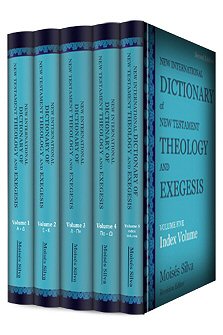
New International Dictionary of New Testament Theology and Exegesis (5 vols.) by Silva, Moisés on pre-pub in Logos

from http://www.logos.com/product/45403/new-international-dictionary-of-new-testament-theology-and-exegesis

Overview

Discover powerful insights into New Testament Greek with this revised edition of Colin Brown’s classic reference work. The New International Dictionary of New Testament Theology and Exegesis provides pastors, students, and scholars with the background and usage of Greek words in the New Testament—as well as related usage in the Septuagint, Jewish literature, and more. Expanded to include words and concepts not discussed in the original work, the second edition contains nearly 800 entries covering over 3,000 Greek words.

New International Dictionary of New Testament Theology and Exegesis (5 vols.)Quickly find the information you need with the new alphabetical arrangement. Look up an English word in the “semantic domain index” and find a listing of Greek words related to that topic. Expand your study with resources listed in the updated bibliography. The entries in this edition have been revised to include insights from modern scholarship and correct inconsistencies and omissions in the original. The New International Dictionary of New Testament Theology and Exegesis is the authoritative version of an essential Greek resource.

The Logos edition of the New International Dictionary of New Testament Theology and Exegesis enhances your study with amazing functionality. Fully integrated into your digital library, the Timeline enables you to instantly contextualize the people, places, and ideas discussed in this resource with thousands of other biblical and world events. Perform powerful searches to instantly gather relevant biblical texts and resources together. Free tablet and mobile apps let you take the discussion with you. With Logos Bible Software, the most efficient and comprehensive research tools are in one place, so you get the most out of your study.

Key Features

  • Provides background and usage of Greek words in the New Testament, Septuagint, Jewish literature, and more
  • Arranges entries in alphabetical order, improving the layout of the original
  • Includes words and concepts not covered in the original work
  • Contains updated entries, bibliographies, and indexes
  • Offers a semantic range index for looking up English words

The New Encyclopedia of Archaeological Excavations in the Holy Land vol.5, Supplementary volume

from http://members.bib-arch.org/encyclopedia/?PubID=BSBKFA&mqsc=E3779014&utm_source=WhatCountsEmail&utm_medium=BHD+Library%20Explorer%20Newsletter&utm_campaign=E4L915

Picture
The New Encyclopedia of Archaeological Excavations in the Holy Land (NEAEHL) provides comprehensive summaries of all major archaeological sites and finds from Israel and Jordan during the past two decades. While the original four-volume NEAEHL was published in 1993, a fifth volume updating the original entries and adding many others was published in 2008 by the Biblical Archaeology Society and the Israel Exploration Society.

Members of the BAS Library now have unlimited access to the fifth volume of this incredible resource. This fully searchable, digital edition of the encyclopedia includes sites from both Israel and Jordan, and covers sites and discoveries relevant to both the New Testament and the Hebrew Bible, as well as excavations from earlier and later periods. Also included are articles on special topics such as Judean Hiding Complexes and Marine Archaeology.

Almost all of the entries are written by the archaeologists who directed the excavations—Amnon Ben-Tor on Hazor; Lawrence Stager on Ashkelon; the late Avraham Biran on Dan; Ephraim Stern on Dor; Ronny Reich, Eilat Mazar and others on Jerusalem; the late Ehud Netzer on Herodium and Masada; David Ussishkin and Israel Finkelstein on Megiddo; Trude Dothan and Seymour Gitin on Tel Miqne/Ekron. In all, more than 160 archaeologists contributed entries to this massive work.

Also included is a useful glossary of technical, geographic and architectural terms, as well as valuable appendices, such as chronological tables, lists of rulers and convenient summaries of the various prehistoric and historical eras covered in the encyclopedia.