Friday, December 26, 2014

Non, Jésus n'est pas né le 25 décembre


Par LEXPRESS.fr, publié le 

C'est pour évangéliser plus efficacement les foules que le clergé, au IVe siècle, aurait décidé de fixer la date de naissance de Jésus au 25 décembre, en se greffant sur une fête païenne. 

Non, Jésus n'est pas né le 25 décembre
Au centre: Joseph en rose, Jésus dans ses langes, et Marie en bleu.
afp.com/Brendan Smialowski
Noël. Une tradition et une fête familiale, qui, pour une majorité d'entre nous, n'a pas ou plus grand-chose à voir avec une pratique religieuse. Mais pour les 12% de Français qui se déclarent catholiques pratiquants, le 25 décembre est l'une des dates les plus importantes du calendrier liturgique: celle à laquelle on fête la Nativité, soit la naissance de Jésus. 
Oui, mais Jésus n'est pas né le 25 décembre. Si l'existence de Jésus, juif galiléen, est une vérité historique pour une majorité d'historiens, on ne sait que peu de chose sur les débuts de sa vie. Et encore moins précisément ses dates et lieux de naissance... C'est le pape Libère qui, autour de l'an 354, aurait très judicieusement décidé de fixer la date de naissance du Christ le jour d'une fête païenne déjà bien installée dans les pratiques populaires de l'époque. Le choix s'est porté sur le 25 décembre, qui correspondait à la fête romaine du "soleil invaincu" (Sol invictus en latin). Un culte païen destiné à célébrer le solstice d'hiver, c'est à dire ce moment de l'année où les journées commencent à rallonger. 
Dit autrement, tout comme certains menhirs bretons ont été transformés en symboles chrétiens en y gravant une croix, la fête romaine du soleil a été christianisée en décrétant que c'était le jour de la naissance de Jésus. 
Plus fort encore, Jésus n'est pas né il y a 2014 ans. Notre actuel calendrier débute par convention avec la naissance de Jésus. En toute logique, Jésus serait donc né au début de l'an 1, soit il y a 2014 ans. Mais d'après de nombreux historiens, Jésus serait plutôt né en -5 ou en -7... avant lui-même. 
Ce qui signifie qu'en toute logique, nous ne serions pas en 2014, mais en 2019 ou 2021. De quoi y perdre son latin. 

En savoir plus sur http://www.lexpress.fr/actualite/societe/non-jesus-n-est-pas-ne-le-25-decembre_1634385.html#HMYwras6oBGs2dEy.99

Thursday, October 30, 2014

Logos 6 has arrived: this particular Bible software is now available on market (for PC and MAC)

for more information see here

Logos 6 is the smartest way to study the Word. With easy‐to‐use tools and a massive theological library, Logos 6 delivers insight. Pinpoint answers in seconds, study the Word in its cultural context, uncover meaning in the original languages, and answer questions with confidence.

Tuesday, September 30, 2014

a blog page of a different "note" than theology on a music piece

Accessed from the blogTomServiceOnClassicalBlog; http://www.theguardian.com/music/tomserviceblog/2014/sep/29/mozart-piano-sonata-manuscript-budapest (September 30, 2014)

Mozart's A major piano sonata K331: the manuscript is discovered!

A chance finding in Budapest has brought a fascinating Mozart manuscript to light. But why can’t we look at it properly?
Balazs Mikusi of the National Szechenyi Library presenting a never before known manuscript of one of the most recognised tunes of Wolfgang Amadeus Mozart, the A major sonata  in Budapest.
A detail from the recently discovered manuscript of Mozart’s A major piano sonata K331. Photograph: ATTILA KISBENEDEK/AFP/Getty Images
News has just come to light of a major Mozart discovery, of a priceless manuscript that had lain in the musty depths of Budapest’s National Szechenyi Library for who knows how many decades, only to be rediscovered by a Haydn scholar making one of the most fortuitous Mozartian tangents of all time.
Instead of a fragment of a letter, a half-forgotten dance, or a torn-off corner of a scrawled sketch, what musicologist Balazs Mikusi found was the substantive part of one of Mozart’s most famous instrumental pieces,the A major piano sonata K331, composed in 1783, whose “Turkish March” finale is one of Wolfgang’s most instantly recognisable tunes, and whose opening movement, a set of brilliantly beguiling variations on one of the most satisfyingly simple melodies he ever composed, is a staple of piano lessons the world over. The final page of the original manuscript has long been known to Mozart scholars, and is part of the legacy in Mozart’s hometown, Salzburg, but no original manuscript of the rest of the piece had ever been seen in modern times.
Balazs Mikusi of the National Szechenyi Library presenting a never before known manuscript of one of the most recognised tunes of Wolfgang Amadeus Mozart, the A major sonata  in Budapest.
Balazs Mikusi of the National Szechenyi Library with the manuscript. Photograph: ATTILA KISBENEDEK/AFP/Getty Images
Until now: Mikusi can’t say how or when these pages ended up in Hungary, and what they reveal are tantalising if subtle differences from the published editions of the sonata: phrasing, dynamics, and even occasionally the notes themselves, as Zoltan Kocsis’s performance on Friday night at the Szechenyi Library revealed. Somewhat frustratingly, the library has only released teasing images of the manuscript rather than the whole thing, which will be available in the future as a no-doubt gorgeous but expensive facsimile edition. So a plea to the Szechenyi Library: given how much original Mozart there is out there online, get the pages of the K331 up there too: pianists of the world need to see what Mozart actually wrote!

Thursday, September 18, 2014

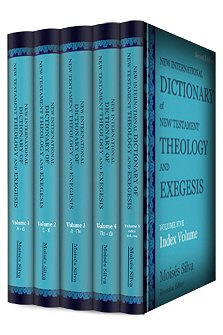
New International Dictionary of New Testament Theology and Exegesis (5 vols.) by Silva, Moisés on pre-pub in Logos

from http://www.logos.com/product/45403/new-international-dictionary-of-new-testament-theology-and-exegesis

Overview

Discover powerful insights into New Testament Greek with this revised edition of Colin Brown’s classic reference work. The New International Dictionary of New Testament Theology and Exegesis provides pastors, students, and scholars with the background and usage of Greek words in the New Testament—as well as related usage in the Septuagint, Jewish literature, and more. Expanded to include words and concepts not discussed in the original work, the second edition contains nearly 800 entries covering over 3,000 Greek words.

New International Dictionary of New Testament Theology and Exegesis (5 vols.)Quickly find the information you need with the new alphabetical arrangement. Look up an English word in the “semantic domain index” and find a listing of Greek words related to that topic. Expand your study with resources listed in the updated bibliography. The entries in this edition have been revised to include insights from modern scholarship and correct inconsistencies and omissions in the original. The New International Dictionary of New Testament Theology and Exegesis is the authoritative version of an essential Greek resource.

The Logos edition of the New International Dictionary of New Testament Theology and Exegesis enhances your study with amazing functionality. Fully integrated into your digital library, the Timeline enables you to instantly contextualize the people, places, and ideas discussed in this resource with thousands of other biblical and world events. Perform powerful searches to instantly gather relevant biblical texts and resources together. Free tablet and mobile apps let you take the discussion with you. With Logos Bible Software, the most efficient and comprehensive research tools are in one place, so you get the most out of your study.

Key Features

  • Provides background and usage of Greek words in the New Testament, Septuagint, Jewish literature, and more
  • Arranges entries in alphabetical order, improving the layout of the original
  • Includes words and concepts not covered in the original work
  • Contains updated entries, bibliographies, and indexes
  • Offers a semantic range index for looking up English words

The New Encyclopedia of Archaeological Excavations in the Holy Land vol.5, Supplementary volume

from http://members.bib-arch.org/encyclopedia/?PubID=BSBKFA&mqsc=E3779014&utm_source=WhatCountsEmail&utm_medium=BHD+Library%20Explorer%20Newsletter&utm_campaign=E4L915

Picture
The New Encyclopedia of Archaeological Excavations in the Holy Land (NEAEHL) provides comprehensive summaries of all major archaeological sites and finds from Israel and Jordan during the past two decades. While the original four-volume NEAEHL was published in 1993, a fifth volume updating the original entries and adding many others was published in 2008 by the Biblical Archaeology Society and the Israel Exploration Society.

Members of the BAS Library now have unlimited access to the fifth volume of this incredible resource. This fully searchable, digital edition of the encyclopedia includes sites from both Israel and Jordan, and covers sites and discoveries relevant to both the New Testament and the Hebrew Bible, as well as excavations from earlier and later periods. Also included are articles on special topics such as Judean Hiding Complexes and Marine Archaeology.

Almost all of the entries are written by the archaeologists who directed the excavations—Amnon Ben-Tor on Hazor; Lawrence Stager on Ashkelon; the late Avraham Biran on Dan; Ephraim Stern on Dor; Ronny Reich, Eilat Mazar and others on Jerusalem; the late Ehud Netzer on Herodium and Masada; David Ussishkin and Israel Finkelstein on Megiddo; Trude Dothan and Seymour Gitin on Tel Miqne/Ekron. In all, more than 160 archaeologists contributed entries to this massive work.

Also included is a useful glossary of technical, geographic and architectural terms, as well as valuable appendices, such as chronological tables, lists of rulers and convenient summaries of the various prehistoric and historical eras covered in the encyclopedia.

Thursday, August 14, 2014

5 Lessons I Learned from the Woman in Proverbs 31 by Lauren Visser

found in http://blog.vyrso.com/2014/08/11/5-lessons-i-learned-from-the-woman-in-proverbs-31/?utm_source=feedburner&utm_medium=feed&utm_campaign=Feed%3A+VyrsoVoice+%28Vyrso+Voice%29

  • August 11, 2014
the-best-yes-making-wise-decisions-in-the-midst-of-endless-demands
Have you ever delved into Proverbs 31 to read what a truly God-fearing woman might be like? The woman described in this chapter sounds almost too good to be true—she’s about as perfect as any human comes! But she’s only striving to do everything and anything that her Lord asks of her.
I find it refreshing to read this chapter occasionally to find God calling me to come closer to him in different areas of life. Here are five ways I’ve felt challenged by the tenacity of the woman in Proverbs 31:

1. She opens her hand to the poor


It’s so easy to get caught up in one’s own life. Go to school, go to work, pick the kids up from daycare, time for church, etc. Life happens. But to be ready and willing, even looking, for chances to welcome the poor or needy into our homes with open arms is a quality many of us feel we just don’t have the time for. In the grand scheme of things though, God calls us to love one another just as he loved us. This is how we should be looking to spend our time first and foremost.

2. She does not harm

Sometimes I catch myself talking with a family member or friend and realize I’ve just turned the conversation into complaining or pity-partying. No one wants to listen to that anyway, so why do I do it? It’s only bringing harm to the relationship. Instead I now turn the conversation around when I sense a downward spiral—dishing out compliments and positive stories that only bring smiles and laughs.

3. She dresses herself with strength

Strength comes in many forms. I imagine the strength of the woman in this chapter to be a humble, yet confident strength. Often I forget the humility part of strength, which turns me into merely a confidently one-sided arguer. Remembering to clothe herself with humility alongside strength must be how this woman was so cherished and praised within her community. (Prov. 31:28)

4. Her lamp does not go out at night

Working late into the nights and being the first one up in the mornings to be sure everyone gets fed sounds to me like a case of extreme diligence and perseverance. The mothers out there probably understand this the best. Working all day and then getting minimal sleep is hard to do, but I’ve found that the days I keep my priorities straight—keeping God on top—I somehow get everything done. And with that checklist completed, I can rest freely and do it again the next day.

5. She laughs at the time to come

I am quick to plan for the future. Not because I’m afraid of what will happen if I don’t have a plan, but because I’m always so anxiously excited for what’s next. But Matthew 6:34 reminds us that we should not worry about tomorrow, we should live for today. The woman in Proverbs 31 understood God’s intention for daily living already before the book of Matthew was written.

What does Proverbs 31 teach you? Take a moment to reflect on this beautiful passage:


How can we embody the Proverbs 31 woman in everyday life? It all starts with small decisions.


Sunday, August 10, 2014

"The Discipline of Trial" E. G. White (English - French)

The Discipline of Trial
To live such a life, to exert such an influence, costs at every step effort, self-sacrifice, discipline. It is because they do not understand this that many are so easily discouraged in the Christian life. Many who sincerely consecrate their lives to God’s service are surprised and disappointed to find themselves, as never before, confronted by obstacles and beset by trials and perplexities. They pray for Christlikeness of character, for a fitness for the Lord’s work, and they are placed in circumstances that seem to call forth all the evil of their nature. Faults are revealed of which they did not even suspect the existence. Like Israel of old they question, “If God is leading us, why do all these things come upon us?”{MH 470.2}
It is because God is leading them that these things come upon them. Trials and obstacles are the Lord’s chosen methods of discipline and His appointed conditions of success. He who reads the hearts of men knows their characters better than they themselves know them. He sees that some have powers and susceptibilities which, rightly directed, might be used in the advancement of His work. In His providence He brings these persons into different positions and varied circumstances that they may discover in their character the defects which have been concealed from their own knowledge. He gives them opportunity to correct these defects and to fit themselves for His service. Often He permits the fires of affliction to assail them that they may be purified.{MH 471.1}
The fact that we are called upon to endure trial shows that the Lord Jesus sees in us something precious which He desires to develop. If He saw in us nothing whereby He might glorify His name, He would not spend time in refining us. He does not cast worthless stones into His furnace. It is valuable ore that He refines. The blacksmith puts the iron and steel into the fire that he may know what manner of metal they are. The Lord allows His chosen ones to be placed in the furnace of affliction to prove what temper they are of and whether they can be fashioned for His work.{MH 471.2}
The potter takes the clay and molds it according to his will. He kneads it and works it. He tears it apart and presses it together. He wets it and then dries it. He lets it lie for a while without touching it. When it is perfectly pliable, he continues the work of making of it a vessel. He forms it into shape and on the wheel trims and polishes it. He dries it in the sun and bakes it in the oven. Thus it becomes a vessel fit for use. So the great Master Worker desires to mold and fashion us. And as the clay is in the hands of the potter, so are we to be in His hands. We are not to try to do the work of the potter. Our part is to yield ourselves to be molded by the Master Worker. {MH 471}
“Beloved, think it not strange concerning the fiery trial which is to try you, as though some strange thing happened unto you: but rejoice, inasmuch as ye are partakers of Christ’s sufferings; that, when His glory shall be revealed, ye may be glad also with exceeding joy.” 1 Peter 4:12, 13.{MH 472.1}
In the full light of day, and in hearing of the music of other voices, the caged bird will not sing the song that his master seeks to teach him. He learns a snatch of this, a trill of that, but never a separate and entire melody. But the master covers the cage, and places it where the bird will listen to the one song he is to sing. In the dark, he tries and tries again to sing that song until it is learned, and he breaks forth in perfect melody. Then the bird is brought forth, and ever after he can sing that song in the light. Thus God deals with His children. He has a song to teach us, and when we have learned it amid the shadows of affliction we can sing it ever afterward.{MH 472.2}
Many are dissatisfied with their lifework. It may be that their surroundings are uncongenial; their time is occupied with commonplace work, when they think themselves capable of higher responsibilities; often their efforts seem to them to be unappreciated or fruitless; their future is uncertain.{MH 472.3}
Let us remember that while the work we have to do may not be our choice, it is to be accepted as God’s choice for us. Whether pleasing or unpleasing, we are to do the duty that lies nearest. “Whatsoever thy hand findeth to do, do it with thy might; for there is no work, nor device, nor knowledge, nor wisdom, in the grave, whither thou goest.” Ecclesiastes 9:10. {MH 472.4}
If the Lord desires us to bear a message to Nineveh, it will not be as pleasing to Him for us to go to Joppa or to Capernaum. He has reasons for sending us to the place toward which our feet have been directed. At that very place there may be someone in need of the help we can give. He who sent Philip to the Ethiopian councilor, Peter to the Roman centurion, and the little Israelitish maiden to the help of Naaman, the Syrian captain, sends men and women and youth today as His representatives to those in need of divine help and guidance.{MH 473.1}

FRANCAIS

La discipline de l’épreuve
Pour vivre une telle vie, pour exercer une telle influence, il faut à chaque pas des efforts, de l’abnégation, de la discipline. C’est parce que beaucoup de chrétiens ne le comprennent pas qu’ils se découragent si facilement. Un grand nombre de ceux qui se consacrent sincèrement au service de Dieu sont surpris et désappointés de se trouver comme jamais auparavant environnés d’obstacles, assaillis d’épreuves et de difficultés. Ils prient Dieu pour que leur caractère ressemble à celui du Christ et qu’ils soient ainsi capables d’accomplir son œuvre. Cependant, ils se voient placés dans des circonstances qui semblent provoquer le mauvais côté de leur nature; des fautes leur sont révélées dont ils n’avaient jamais soupçonné l’existence. Ils se demandent, comme les enfants d’Israël: “Si l’Eternel nous conduit, pourquoi toutes ces choses nous arrivent-elles?”{MG 406.1}

Mais c’est précisément parce que Dieu les conduit que tout cela leur arrive. Les épreuves, les obstacles sont des moyens choisis par le Seigneur pour nous discipliner et nous aider à réussir. Celui qui lit dans le cœur des hommes les connaît mieux qu’eux-mêmes. Il sait que quelques-uns ont des talents qui, bien employés, pourraient contribuer à l’avancement de son règne. Dans sa providence, il place ces personnes dans certaines situations qui leur permettent de découvrir des défauts ignorés, ce qui leur donne l’occasion de se corriger et de se préparer à son service. C’est pour les purifier qu’il les fait souvent passer par l’épreuve.{MG 406.2}

Si nous sommes appelés à rencontrer des difficultés, c’est que le Seigneur voit en nous quelques qualités précieuses qu’il veut mettre en valeur. Si rien dans notre personne ne pouvait glorifier son nom, il ne perdrait pas son temps à nous purifier. Ce ne sont pas les pierres sans valeur, mais le minerai précieux qu’il jette dans la fournaise. Le forgeron met le fer et l’acier au feu pour éprouver leur résistance. De même le Seigneur permet que ses enfants passent par l’affliction afin de leur fournir l’occasion de montrer leur trempe et prouver qu’ils peuvent être formés pour son service. {MG 406.3}
Le potier prend l’argile, la façonne, la pétrit, la travaille à sa guise. Puis, après quelque temps, lorsqu’elle est parfaitement malléable, il en fait un vase qu’il polit au tour, sèche au soleil et met au four. Et ce vase devient l’ustensile que nous employons. C’est ainsi que le grand Ouvrier veut nous modeler. Il faut que nous soyons entre ses mains ce qu’est l’argile entre celles du potier. Nous n’avons pas à nous façonner nous-mêmes, mais à nous montrer assez malléables pour l’être par le Seigneur.{MG 407.1}

“Bien-aimés, écrit l’apôtre Pierre, ne soyez pas surpris, comme d’une chose étrange qui vous arrive, de la fournaise qui est au milieu de vous pour vous éprouver. Réjouissez-vous, au contraire, de la part que vous avez aux souffrances de Christ, afin que vous soyez aussi dans la joie et dans l’allégresse lorsque sa gloire apparaîtra.” 1 Pierre 4:12, 13.{MG 407.2}

En plein jour, et à l’ouïe de la musique d’autres voix, il est impossible d’apprendre à chanter à un oiseau en cage. Son oreille perçoit tant d’autres mélodies, qu’il n’arrive à retenir qu’un fragment de ceci, une trille de cela, sans jamais pouvoir répéter un morceau tout entier. Mais si le maître couvre la cage et la met dans un endroit obscur où l’oiseau n’entend que la mélodie qu’il doit apprendre, il essaie de la vocaliser. Il s’arrête, recommence, jusqu’à ce qu’il puisse la chanter sans hésitation. On peut alors le mettre au grand jour, et être assuré qu’il n’oubliera jamais la mélodie apprise. C’est ainsi que Dieu agit avec ses enfants. Il nous enseigne, dans les ténèbres de l’affliction, un chant que nous n’oublierons plus jamais. {MG 407.3}

Beaucoup se plaignent de leurs occupations. Leur milieu est peut-être peu sympathique; alors qu’ils se croient capables de porter certaines responsabilités, ils passent leur temps à un travail qu’ils estiment fastidieux, souvent inapprécié et stérile, et leur avenir leur paraît incertain.{MG 408.1}

Mais il ne faut pas oublier que notre besogne, même si nous ne l’avons pas choisie, doit être accomplie comme si c’était Dieu lui-même qui nous l’avait confiée. Qu’elle nous plaise ou nous déplaise, il faut nous en acquitter puisque c’est celle qui se présente à nous. “Tout ce que ta main trouve à faire avec ta force, dit le Sage, fais-le; car il n’y a ni œuvre, ni pensée, ni science, ni sagesse, dans le séjour des morts, où tu vas.” Ecclésiaste 9:10.{MG 408.2}

Si le Seigneur nous envoie, comme Jonas, à Ninive, il ne veut pas que nous nous rendions à Joppé ou à Capernaüm. Il a des raisons pour nous envoyer là où nos pas ont été dirigés. Peut-être y a-t-il où nous sommes quelque âme à secourir. Celui qui conduisit l’évangéliste Philippe vers le ministre éthiopien, l’apôtre Pierre vers le centenier romain, Corneille, et la jeune fille israélite vers le capitaine syrien, Naaman, envoie aujourd’hui des hommes, des femmes, des jeunes gens pour le représenter auprès de ceux qui ont besoin des secours et des directives célestes.{MG 408.3}